The Art of Process Engineering

Engineering Services

Engineering as the technical foundation of safe and efficient systems.

Overview

Engineering Services in Detail

At N-thalpie, engineering forms the technical basis of all solutions. From digital design and numerical simulation to thermodynamic analysis, we develop well-founded basis for decision-making.

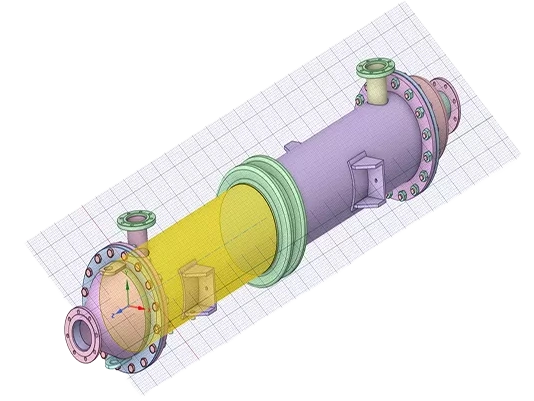
CAD Design

Digital design of components, assemblies and plants as the basis for simulation, calculation and manufacturing – precise, standards-compliant and consistently usable.
Flow Simulation

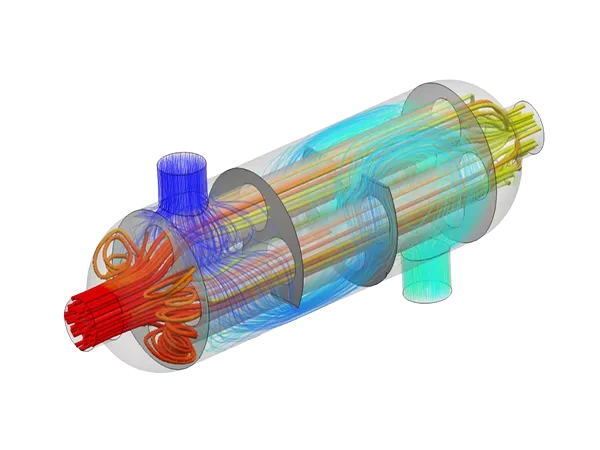
Numerical analysis of flow and heat transfer processes for the evaluation, optimisation and validation of technical decisions.
Thermodynamic Analysis

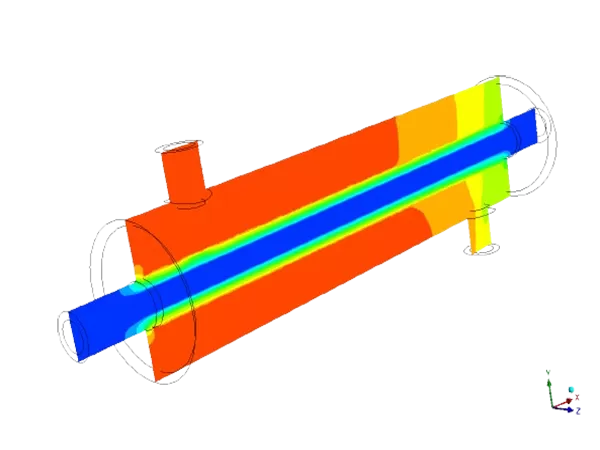
Analysis of thermal processes, cycles and systems to increase efficiency, evaluate operating conditions and develop sustainable concepts.

CAD Design Creation

At N-thalpie, computer-aided design forms the basis of the entire development process. CAD models are not only used for design, but also serve as the starting point for numerical calculations, simulations and manufacturing.

Scope of Services

Your Benefits

Flow Simulation (CFD)

Realistic understanding of flow and heat transfer processes.

Using Computational Fluid Dynamics (CFD), we analyse the behaviour of gases and liquids as well as their interaction with solid structures. This allows pressure losses, temperature distributions and flow phenomena to be assessed and specifically optimised at an early stage.

Our CFD Process at N-thalpie

1) Problem Definition

We clearly define the task, the system geometry, the boundary conditions and the relevant physical properties of the fluids involved.

We create or prepare a digital representation of the geometry using CAD software. The geometry clearly defines the simulation domain, interfaces and relevant component areas.

The geometry is divided into small discrete elements (mesh). The quality and resolution of the mesh have a significant impact on the accuracy and convergence of the simulation. Depending on the requirements, suitable techniques are used (e.g. conformal meshing).

We define material and fluid properties (e.g. density, viscosity and thermal conductivity) and select suitable models (e.g. turbulence models). Correct definition of the boundary conditions is essential for obtaining meaningful results.

To solve the governing equations of fluid dynamics, including the Navier-Stokes equations, we use numerical methods such as finite volume, finite element or finite difference methods. The solution is robustly configured using suitable algorithms and convergence criteria, including temporal and spatial discretisation. Depending on the complexity, a simulation may take minutes, days or weeks.

The simulation results are evaluated and visualised, for example using velocity contours, pressure distributions and temperature profiles. Upon request, we derive optimisation measures from these results, such as geometry modifications or variation of operating parameters.

Thermodynamic Analysis

Evaluation and optimisation of thermal systems.

Thermodynamic analysis is an essential part of the development of efficient heating and cooling systems and forms the basis for sound system decisions. It requires a deep understanding of thermodynamic processes as well as heat and mass transfer.

Key Focus

Your Benefits